
Virginia Directory Collection Map
Virginia has no single continuous statewide directory run. LVA, its microfilm shelves, and national collections cover different places and years. Treat each range below as a collection route, not proof that every locality appears every year. Check the title and locality in each volume before marking a household present or absent.
| Collection | Years | Where Held | Access |
|---|---|---|---|
| LVA and Ancestry Virginia city directories | Selection, 1873-1960 | Ancestry for Virginians and Library of Virginia | Free account and location validation for Virginia users; browse by locality and year |
| LVA microfilmed city directories | Major cities, late 1800s to about 1940; dates vary | LVA reading room and some local libraries | Microfilm reader; interlibrary loan may be offered for some reels |
| LOC city directories and criss-cross data | Primarily 1861-1960; gaps may reach five years | LOC microform resources and national data package | Search by place, year, street, or address; confirm scan access |
| Virginia newspapers and holdings directory | Varies by title and locality | Virginia Chronicle, LVA, universities, historical institutions, and libraries | Search notices online or route a title by county, city, or category |
| LVA Chancery Records Index | Early 1700s through the 20th century; focus before 1913 | LVA index and scanned causes | More than 100 of 133 localities; check image and processing status |
| WPA Virginia Historical Inventory | Fieldwork from the late 1930s | LVA digital and archival collections | Search reports, photographs, maps, buildings, cemeteries, and people |
| Sanborn fire insurance maps | Virginia maps from 1867 onward; town and year coverage varies | LVA, LOC, and some library services | Check the holding institution and map year for the place of interest |
| Federal population schedules | 1790-1950 currently public | National Archives and partner databases | Household fields and street detail differ by census year |
These sets do not name one confirmed statewide directory publisher or a single final print year. A local library may hold volumes not listed in a statewide digital selection, and a nearby town may be bound into a larger city's book. Check the title page, preface, locality list, and street index before treating two volumes as a matched annual series.
Virginia Digital Directory Access
The Library of Virginia's Ancestry for Virginians collection has selected city and county directories from 1873 to 1960. Virginia residents can create a free account, validate their location, and browse by locality and year. The selection does not include every town or every printed volume.
Check the locality list before a surname search. A scan may be filed under a county, independent city, or older community name. If a Virginia city directory year is missing, note the title and locality, then ask LVA or a reference librarian about a physical, microfilm, or partner copy.
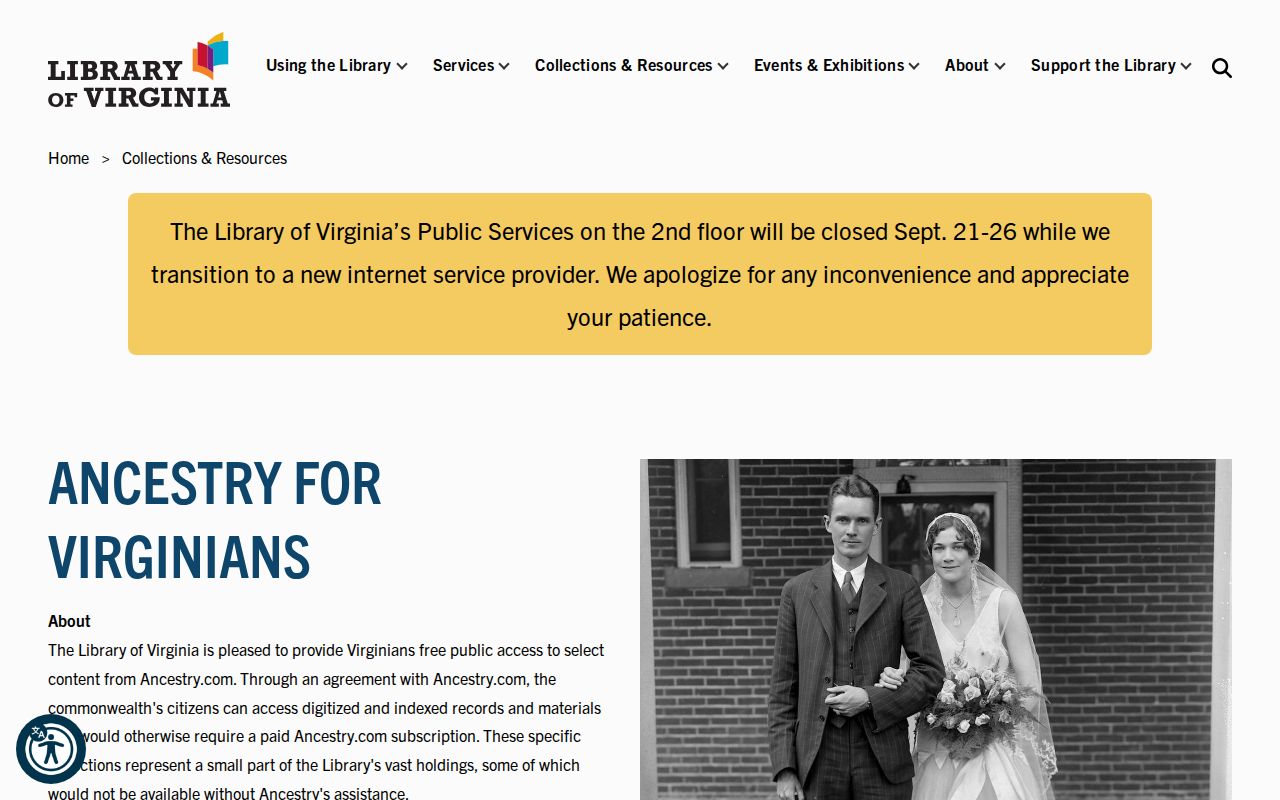
The image shows one statewide entry point; the detailed year list still needs a locality-by-locality check.
Virginia City Directory Microfilm
LVA describes microfilmed directories for major Virginia cities from the late 1800s through about 1940, with dates that vary by locality. The county and city microfilm guide is the practical first stop: choose the relevant locality and record group, then check whether a reel, book, or related series is listed. A county name alone may not be enough because independent cities have separate records and older material may sit under a predecessor jurisdiction.
The Library of Virginia's Archives Research Room is at 800 East Broad Street in Richmond. Its visit page lists current public hours and access details. Researchers age 16 or older need a valid LVA card. The microfilm area also holds deeds, wills, court and vital records, military files, and land-office material, which can help when a directory points to a second record trail.
With a library card, LVA charges 50 cents per microfilm print. Some reels may be available through interlibrary loan; local libraries and historical societies may hold copies too. The LVA locality guide lists county and city record groups.
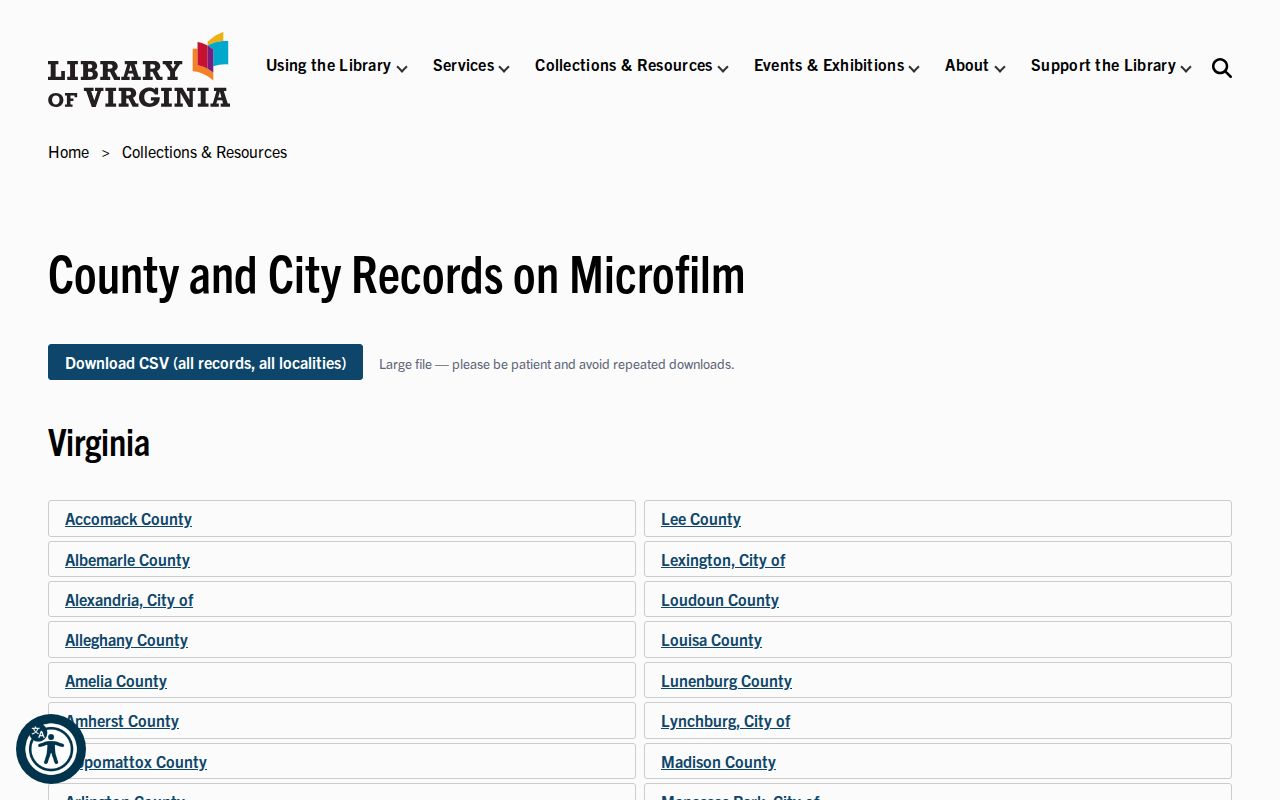
Use the relevant locality entry to check the exact directory range and possible loan route before making a trip.
Reading Virginia Directory Entries
A Virginia city directory usually sorts household or individual entries by surname. A line may pair a person's name with an occupation or business role and a street address. Depending on publisher and year, it may add a spouse or widow notation, an owner or renter mark, or a telephone number. Separate classified, church, government, and society sections can supply context, but each volume has its own shorthand. Read the preface and abbreviation key before copying a mark into family notes.
| Name | Surname and given name, often alphabetized; a household or spouse note may follow |
|---|---|
| Occupation | Trade, profession, or business role where recorded |
| Address | House number and street; use the book's key for abbreviations |
| Household marks | Owner, renter, householder, spouse, or widow notation where that edition uses one |
| Later entries | Telephone number, business listing, or reverse address entry in some runs |
- Criss-cross directory
- A reverse listing arranged by street address, then occupant, rather than by surname.
- Householder index
- A name-led section that groups people linked to a household or address when the publisher records that detail.
- Abbreviation key
- The volume's list of shortened terms and marks; consult it before reading an entry as a full phrase.
LOC notes that surveys and publication were irregular, and one volume may include nearby communities. An absent line can reflect a missed household, skipped year, address change, or spelling choice. It is a lead to test, not proof of absence.
Virginia Reverse Directory Searches
When the address is known but the name is not, search a reverse city directory or street-order section. The Library of Congress describes a national directory collection and a criss-cross metadata package that can help locate address-to-occupant records. Start with the locality, street spelling, and number. A scan may sit under a nearby city or appear in a volume that covers several towns.
The LOC guide to city directories explains the difference between alphabetical entries and reverse listings. Search the metadata by address or street, then confirm that a digitized volume is actually available. The data package and its map help locate a candidate record; neither replaces reading the original page.
Reverse entries are especially useful when a surname has changed or an occupant used initials. But a street number can be renumbered, and a road can cross an old city boundary. Match the locality and year before carrying an occupant backward. A modern address trail is handled in the Virginia street records walkthrough, which focuses on parcel and deed tools.
Trace Virginia Households in Directories
Pair one directory edition at a time with the nearest public census and newspaper results. Keep the volume's wording and note each address or household change. Most 1890 federal population schedules were destroyed, so other dated sources may bridge that gap.
- Write the exact name forms, locality, and address from a known record.
- Search the nearest available directory by surname, then check the street-order pages.
- Repeat in the next dated volume and note each move, household mark, and gap.
- Pair each directory year with the closest census, deed, tax entry, or newspaper notice.
- Check an obituary, cemetery record, probate file, or chancery cause for a later family link.
- Keep the source title, year, page image, locality label, and uncertainty with each match.
A name that vanishes may signal a move, death, missed household, skipped edition, or new spelling. Do not choose one explanation from the directory alone. Census, deed, newspaper, and probate records can test the change.
The National Archives overview lists public census years and the 72-year rule. Compare only fields recorded in that year.
Virginia Chancery for Family Clues
Virginia's Chancery Records Index can add people and property links that a directory does not show. LVA reports indexed information or scans from more than 100 of the Commonwealth's 133 localities, with causes ranging from the early 1700s into the 20th century and a strong pre-1913 focus. A cause may name witnesses, heirs, relatives, neighbors, business partners, or people tied to a land dispute. It can also include a legal description or a sequence of family events.
The Chancery Records Index map includes locality names, previous names, processing status, record dates, and image availability. An active locality may be closed for physical use or reproduction during conservation or digitization. Check the image date range instead of assuming every indexed cause has a scan.
The map is a useful way to see which localities and date spans are represented. Open the LVA Chancery Records Index to check the place and image status.
Use the locality and processing details to decide whether to search online, ask LVA, or follow the court record through a local repository.
Virginia WPA and Sanborn Maps
Older directories can be anchored to a building as well as a name. The WPA Virginia Historical Inventory contains more than 19,300 survey reports, 6,200 photographs, and 103 annotated maps made through late-1930s fieldwork. Reports cover buildings, cemeteries, local people, events, and place histories. The LVA inventory collection can connect a directory address to a documented property or nearby landmark.
Sanborn fire insurance maps for Virginia begin in 1867, though the town and year range varies. They can show a building footprint, use, height, roof, windows, and street context. A map is not a resident list or an ownership record. Use it to see whether a structure or street form fits the directory date, then verify occupants in a directory, deed, or census record.
Some maps and reports require a visit or access through a library partner. LVA's holdings, the Library of Congress, and local library services do not share one statewide catalog of every available sheet, so check the town and map year with the holding institution.
Virginia Newspaper Cross-Checks
Virginia Chronicle adds dated notices between directory editions. Its OCR search and page images can turn up a name, street, obituary, marriage notice, property advertisement, or community item. The run varies by newspaper title, so a no-hit search can mean that the likely paper or date is not digitized. Try name variants and street forms, then inspect the page image because OCR may misread initials and older type.
If the likely title is not in Virginia Chronicle, search the Virginia Newspaper Directory by county, city, title, or category. It can point to a university archive, a historical society, or a local library. LVA cautions that holdings outside the Library were not comprehensively updated after the early 2000s, so contact the listed institution to confirm current access.
News notices are supporting evidence. Compare a reported address or family link with a directory, deed, probate record, or cemetery record before treating it as a match.
Virginia Directory Gaps and Lost Records
A broad year range is not an annual run. LVA's digitized selection, its late-1800s-to-about-1940 microfilm for major cities, and the Library of Congress' primarily 1861-to-1960 national collection are separate products. LOC warns that its directory ranges can have gaps of up to five years. These are different access paths, not competing claims about one shelf. Check them together, then ask the locality's library or historical society about an unlisted year.
Local record history can explain why a family trail stops. Virginia's county and independent-city boundaries changed over time, and older papers may be filed under a predecessor locality. Courthouse fires also damaged records in some places. LVA's preservation work includes microfilm, copied records, and the Burned Jurisdictions guide, but a digitization project does not make every source available online.
The LVA Burned Jurisdictions Database helps identify lost court series and surviving copies. Its entry points and search modes are shown here.
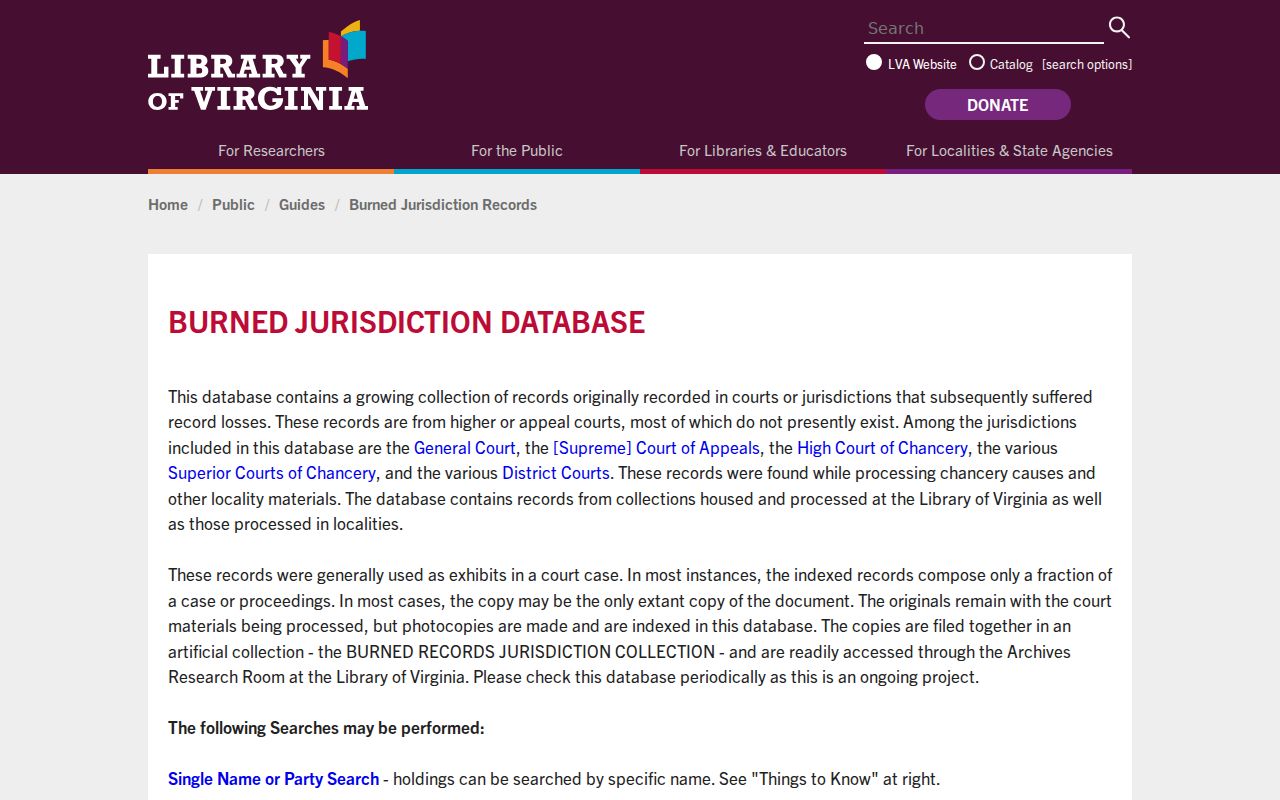
When a source is missing, keep that gap visible in the family notes and test another record group rather than treating silence as proof of absence.